





The Seven Priority Issues (Materiality)
- History of Activities
- Selection of the Seven Priority Issues (Materiality)
- Employee Awareness-raising Activities
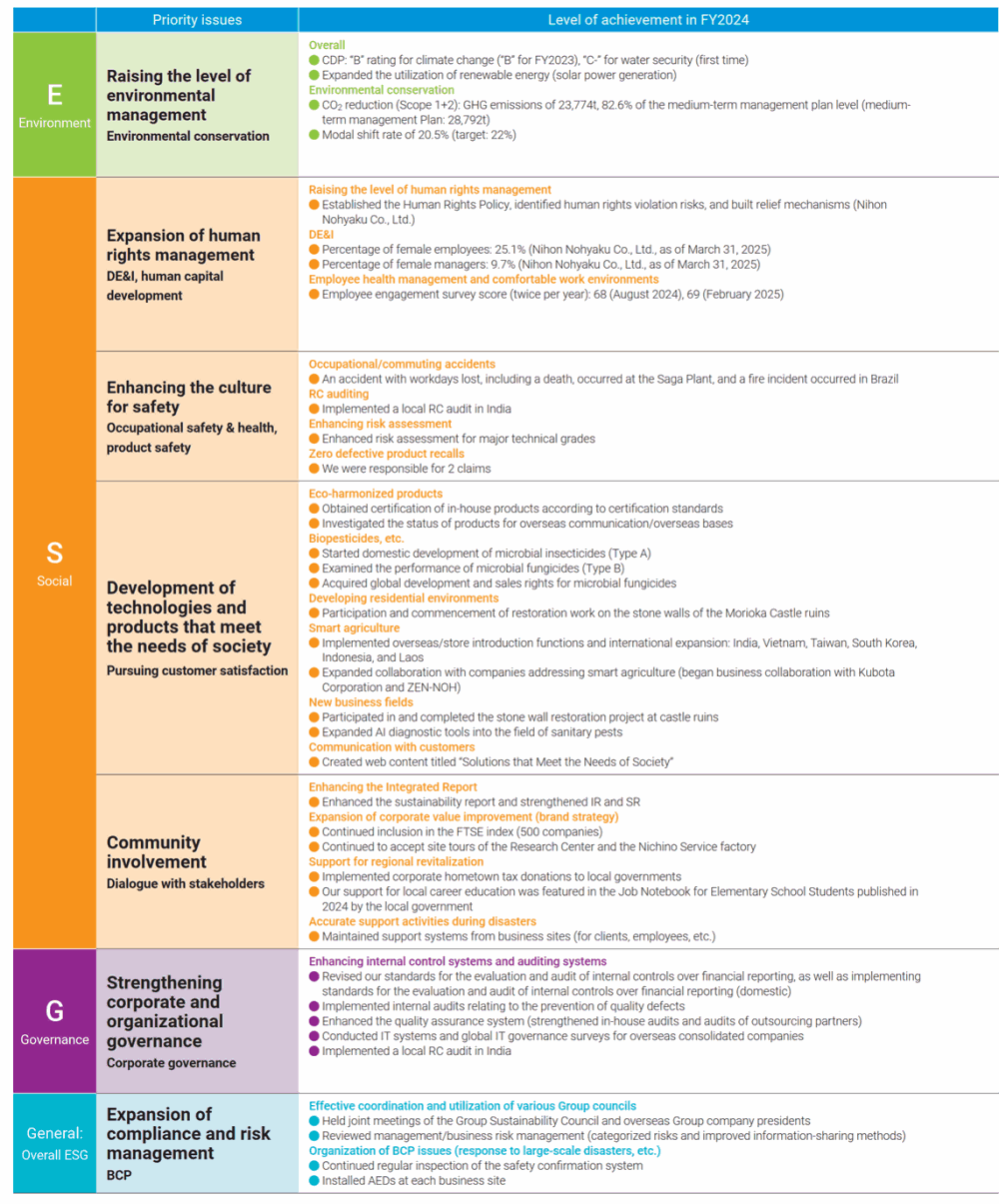
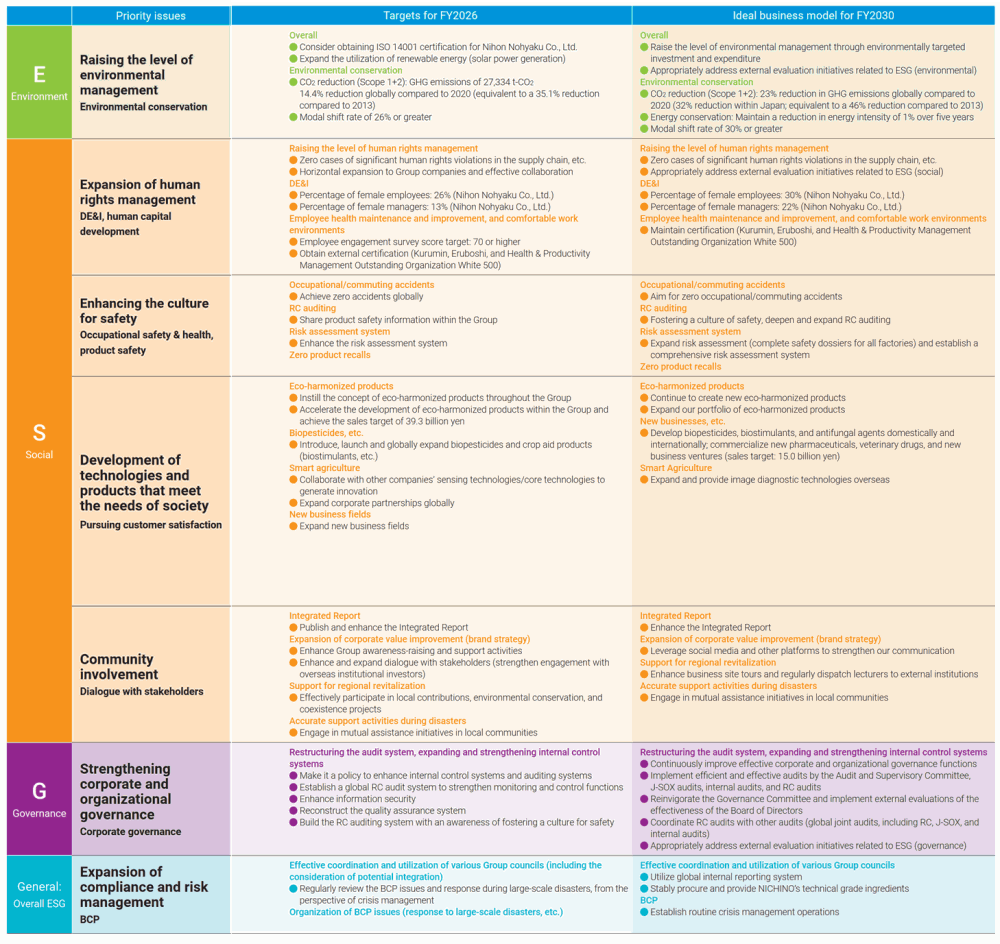
- Overview of the Level of Achievement of the Seven Priority Issues (Materiality) in FY2024, Targets for FY2026, and Ideal Business Model for FY2030
History of Activities
NICHINO Group is deeply involved in the safe production and stable supply of food, with a primary focus on the agrochemical business. The businesses we operate are closely interrelated with the concepts of SDGs and sustainability, which aim to achieve both sustainable economic growth and environmental conservation through a wide range of technological innovations in crop protection. They can address food problems related to population explosion and climate change, promote environmentally friendly practices in crop production, and contribute to coexistence with the natural environment.
In 2015, the United Nations adopted the 2030 Agenda for Sustainable Development and the SDG Compass - a guide for companies to align their actions with the SDGs. Since then, companies have been expected to undertake initiatives that contribute to society in consideration of all stakeholders.
In response to such changes in the social landscape, we identified how to systematically and effectively practice CSR management, adopting it as a management issue in our previous medium-term management plan, EGG2. In our new medium-term management plan, GGS, which began in FY2024, we will further develop our previous CSR management toward sustainability management, aiming to achieve sustainability for both society as a whole and the Group.
Selection of the Seven Priority Issues (Materiality)
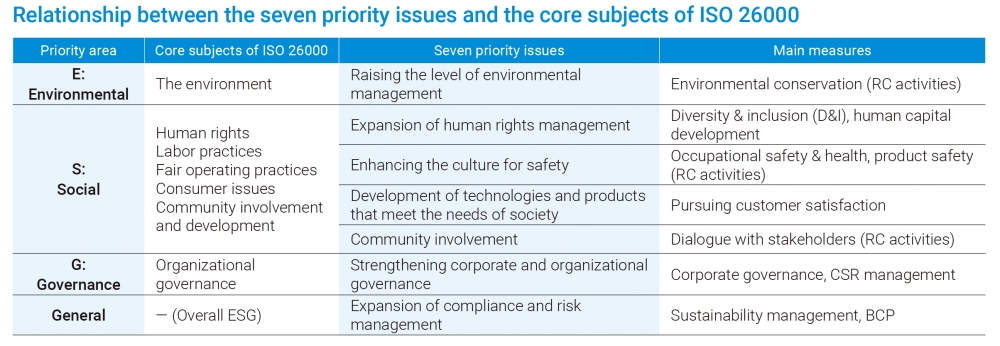
In the previous medium-term management plan EGG2, we selected “Seven Priority Issues (materiality)” as priority areas and issues for CSR management (May 2021). These issues represent fundamental and major issues in the development of the Group’s business activities under the medium-term management plan GGS. We continue to address them as material issues.
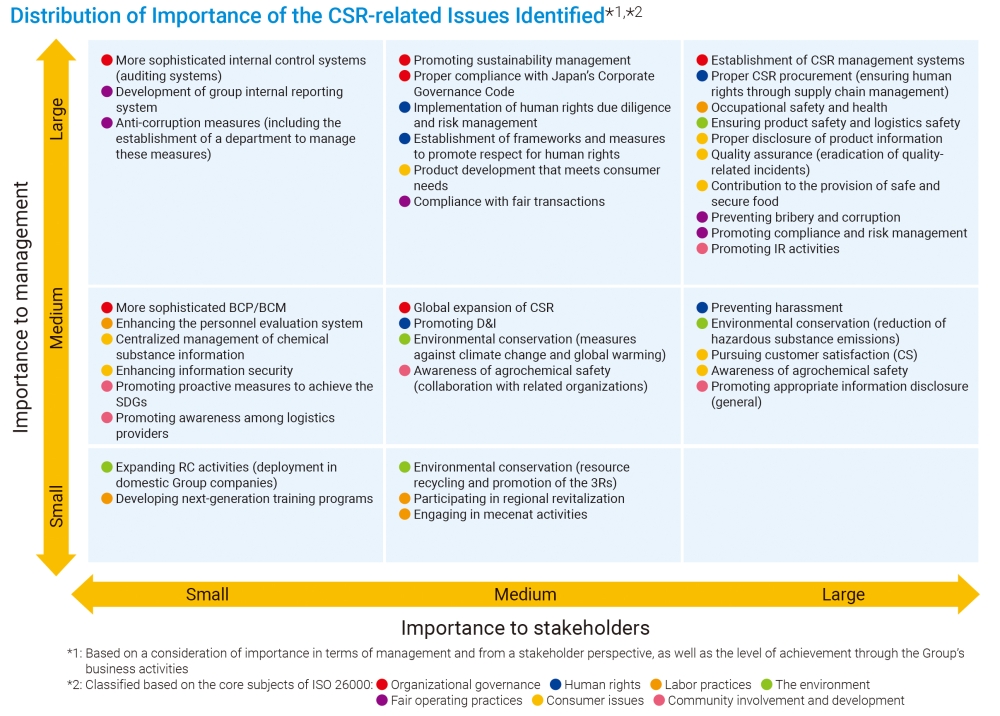
The overview of the materiality selection process is as follows (figure and table below). We first comprehensively identified CSR-related subjects and issues and then created a comparison table based on the seven core subjects of the ISO26000, global CSR guidelines (Step 1).Next, we grouped like items and analyzed their level of priority based on their importance to corporate management and stakeholders (Step 2). We then reflected the Group’s actual level of achievement against the results of this analysis, and selected material issues to address as a priority. Then, after discussions by the CSR-WG and CSR Committee at the time and advice from the Board of Directors, we finalized the Seven Priority Issues (materiality). In addition, we established the “Ideal business model for 2030” and the “key tasks and KGI/KPI for the medium-term management plan” at the same time(Step 3).
Employee Awareness-raising Activities
We have selected our Seven Priority Issues (materiality) and set specific challenges and targets, enabling us to visualize the Group’s activities based on our management plan. This also facilitates integrated sustainability promotion by both management and employees, as well as the dissemination and sharing of information with stakeholders. Furthermore, progress is reviewed annually across each department and Group company in terms of the specific challenges and targets established for our Seven Priority Issues.
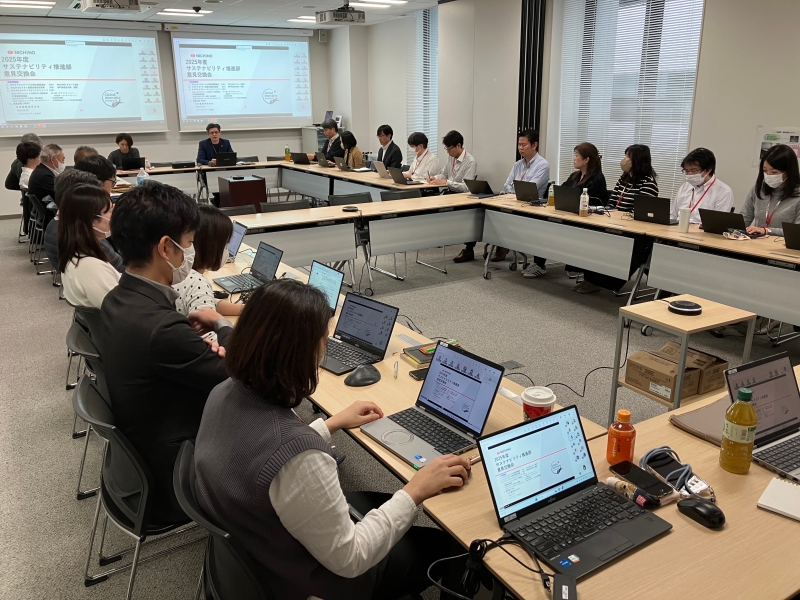
The Sustainability Promotion Department conducts activities to assess the implementation of our specific policies and the situation on the ground. These activities include annual employee surveys and sustainability discussion meetings held at each department and each Group company. The department also works on ongoing sustainability awareness-raising activities through the bi-monthly distribution of sustainability-related articles and videos. Starting in FY2025, sustainability targets have been integrated into our business goals to encourage an even deeper understanding of sustainability and link the philosophy of sustainability management with daily operations.
Overview of the Level of Achievement of the Seven Priority Issues (Materiality) in FY2024, Targets for FY2026, and Ideal Business Model for FY2030