






Sustainability Promotion System and Functions
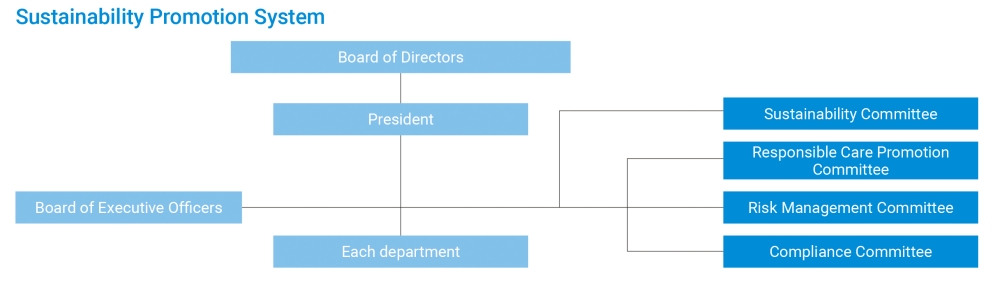
In line with the transition to sustainability management based on the basic strategy of the medium-term management plan, we have changed parts of our related systems and distributed functions based on consideration of past CSR activity results and issues (2024: Figure below).
The functions of the CSR Committee, which previously oversaw CSR-related activities and approved policies and plans for important matters, have been integrated into the Board of Executive Officers. Through these measures, we are promoting more efficient deliberation
and decision-making, as well as more synchronized initiatives based on the relationship of business plans and policies with sustainability. In addition, the CSR Working Group, which played a core role in planning, implementation, and managing schedules for CSR-related activities, has been renamed the Sustainability Committee. This committee has taken over the support functions of the three previous committees (Compliance, Risk Management, and Responsible Care (RC) Promotion) and works with the subcommittees and working groups established under it to promote more effective, cross-organizational activities than ever before. In addition, we have reorganized the CSR Promotion Department, which functioned as the administrative office of the CSR-WG, into the Sustainability Promotion Department of the Corporate Planning Division. This has enabled the Corporate Planning Division to undertake efficient activities while visualizing the overall situation from a company-wide and group-wide perspective.
Through the reorganization of these systems and functions, we are pursuing more flexible efforts to increase both financial and non-financial value (sustainability management) from the perspective of business execution responsibility.
[Functions of Each Sustainability Promotion Body]
Sustainability Promotion Department: In addition to planning sustainability activities and coordinating achievements and challenges, the Sustainability Promotion Department supports the activities of subcommittees and working groups established under the Sustainability Committee, facilitates information sharing and collaboration with domestic and overseas Group companies, responds to external evaluations, and ensures appropriate information disclosure. Through these fundamental functions, the department leads the visualization and expansion of Group-wide sustainability promotion activities.
Sustainability Committee: As the body responsible for overseeing sustainability management, the Sustainability Committee ensures the effective administration of the Group’s sustainability activities by advising on the development of key policies and internal regulations, as well as various related initiatives. It also oversees three committees: the Compliance Committee, Risk Management Committee, and Responsible Care Promotion Committee.
Board of Executive Officers: Through information sharing, discussions and reports by executive officers on issues related to sustainability management and the measures taken to address them, the Board of Executive Officers ensures appropriate and smooth decision-making. It also works to comprehensively strengthen sustainability management from the perspective of business execution. This includes reporting by the three committees mentioned above and internal control and J-SOX audit reports relating to financial reporting (Internal Control & Audit Department).
Board of Directors: The Board of Directors is the ultimate decision-making body for sustainability management and related initiatives. Important sustainability-related matters approved by the Board of Executive Officers are deliberated and reported at meetings of the Board of Directors, where multifaceted advice and recommendations are added. This facilitates the promotion and further advancement of sustainability management with an even closer alignment between management and employees.
